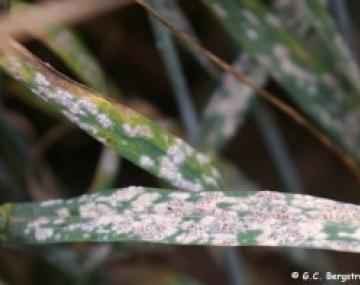
What is it?
Integrated pest management (IPM) is an ecosystem-based strategy that focuses on long-term prevention of pests or their damage through a combination of techniques such as biological control, habitat manipulation, modification of cultural practices, and use of resistant varieties. Pesticides are used only after monitoring indicates they are needed according to established guidelines and treatments are made with the goal of removing only the target organism. Pest control materials are selected and applied in a manner that minimizes risks to human health, beneficial and non-target organisms, and the environment.
Through regular scouting the PGF staff will make decisions when to spray or apply biologicals based on pest thresholds and treatment plans for each growing area. Users are expected to keep their areas (including floors and benches) clean of unwanted plant material and debris. Only greenhouse staff are allowed to apply pesticides to plants in the PGF facilities.
Cultural controls are practices that reduce pest establishment, reproduction, dispersal, and survival. For example, changing irrigation practices can reduce pest problems, since too much water can increase root disease and weeds. Proper fertilization can help plants defend themselves from diseases and make them less desirable to pests. For example, too much fertilizer can make plants leggy and more susceptible to mite and aphid infestations. Whereas too little fertilizer can stress plants and makes them more prone to insect attacks.
Mechanical and physical controls kill a pest directly or make the environment unsuitable for it. Sticky card traps are examples of mechanical controls. Physical controls include: Sweeping floors and benches to inhibit breeding grounds for pests and diseases, proper order entry of growing areas (i.e. move from clean to dirty or new to old plant material first), steam sterilization of the soil for disease management, or barriers such as screens to keep birds or insects out.
Biological control is the use of natural enemies—predators, parasites, pathogens, and competitors—to control pests and their damage. Biologicals can be used in the form of natural predators and parasites or as sprays to inhibit the growth of pathogens or cause death to the pest. Fungal spores that attack insects are an example of biochemical control.
Common Greenhouse Pests
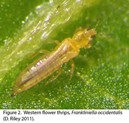
Western Flower Thrips
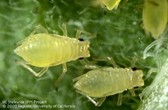
Aphids
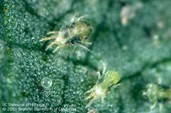
Spider Mites
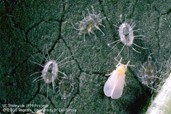
Whitefly
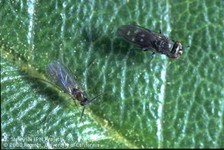
Fungus Gnats and Shore Flies